Rosemary oil and hair growth: what science says
Editorial Team
Quick Summary
Yes, there are promising signs: a clinical trial compared rosemary oil with 2% minoxidil in 100 men with androgenetic alopecia and suggests it could help. However, the sample is small and has not been widely replicated, so the evidence remains limited.
- Dilute rosemary oil between 1% and 2% in a carrier oil.
- Apply it to the scalp 2 or 3 times a week with a 3 to 5-minute massage.
- Perform a tolerance test on the forearm and wait 24 hours before using it.
- Results require at least 3 to 6 months of consistent use, and consult a dermatologist if there is no improvement in 6 months.
Table of Contents
- How to use rosemary oil for hair growth, step by step
- How long it takes for hair to grow with rosemary oil and if it's best to leave it on overnight
- Frequently Asked Questions
Is rosemary oil good for hair growth? What science says
If you are looking for natural remedies to stop hair loss, you have probably seen rosemary oil everywhere. At Hair Plus Productos, we review the actual evidence: there are promising signs, but the scientific basis remains limited.
clinical study that compared rosemary oil with 2% minoxidil in men with androgenetic alopecia
That trial evaluated 100 men and suggests that rosemary oil could help, but the sample is small and has not been widely replicated. If you want more context on natural options for hair care, read this article about beautiful hair with Hair Plus.
review on the effectiveness of rosemary oil against hair loss
How to use rosemary oil for hair growth, step by step
The correct dilution separates a useful treatment from irritation.
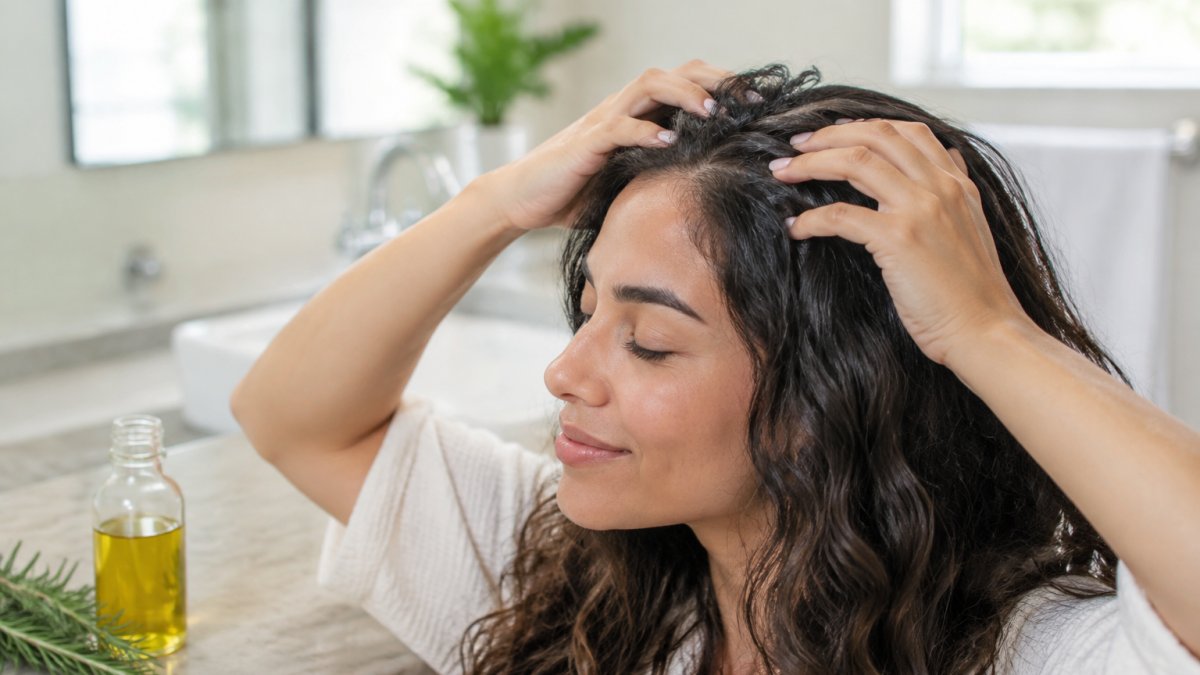
1. Prepare the correct dilution (the part almost no one explains)
Dilute it between 1% and 2% in a carrier oil: start with 1% if your scalp is sensitive and do not exceed 2% without a dermatologist's recommendation. Caution: pure essential oil on the skin can cause burning, redness, and peeling; never use it undiluted.
2. Choose the carrier oil according to your hair type
Oily or seborrheic hair: jojoba or grapeseed, a small amount and maximum 30 minutes. Dry or damaged hair: fractionated coconut, avocado or olive oil, 1 to 2 hours. Sensitive scalp: jojoba with a 1% dilution.
3. Apply to the scalp, not the lengths
With a dropper or fingertips, apply the mixture to the scalp in sections and massage for 3 to 5 minutes in gentle circles to promote microcirculation.
4. Respect the contact time and wash
Leave it on for 30 minutes to 2 hours depending on the carrier and wash with a gentle shampoo. If your scalp is oily, do not leave it on for more than 30 minutes.
5. Recommended frequency
Apply 2 or 3 times a week: daily use has not been proven to be better and increases the risk of irritation. Consistency over months matters more than quantity.
6. Tolerance test before starting
Apply a small amount diluted to the inside of the forearm and wait 24 hours. If there is no redness or itching, you can use it on the scalp.
If you prefer something already prepared, our Growth Activator is designed to be used on the scalp as part of a routine.
These are the key steps of application, with the time or frequency of each:
| Step | What to do | Time or frequency |
|---|---|---|
| Dilution | Dilute in carrier oil | 1% to 2% |
| Carrier oil | Choose according to hair type | Between 30 min and 2 h |
| Application | On the scalp, with massage | 3 to 5 minutes |
| Contact time | Leave on and wash with gentle shampoo | 30 min to 2 h |
| Frequency | Apply on alternate days | 2 or 3 times a week |
| Tolerance test | Test on the forearm | 24 hours |
How long it takes for hair to grow with rosemary oil and if it's best to leave it on overnight
Do not expect visible changes before several months, and rosemary oil does not replace a dermatological treatment when there is diagnosed alopecia.
Realistic waiting time
Hair grows approximately half an inch per month, and most professionals agree that at least 3 to 6 months of consistent use are needed, and in some cases up to 12 months. If you do not notice a difference in 6 months, consult a dermatologist. Caution: giving up after 4 or 6 weeks is the most common mistake.
Is it best to leave it on overnight?
There is no evidence that leaving it on overnight is better than applying it and washing it: you gain prolonged contact but accumulate product, irritation, and stains on the pillow. If you do, use a small amount, 1% dilution, and a light carrier like jojoba.
Combination with other treatments (the angle almost no one covers)
If you are in dermatological treatment, consult with your doctor before adding any product to your routine.
If you are looking for a daily use dropper, the Growth Dropper - Hair Loss Control is designed to be applied over the entire scalp, up to twice a day, for US$31.99.
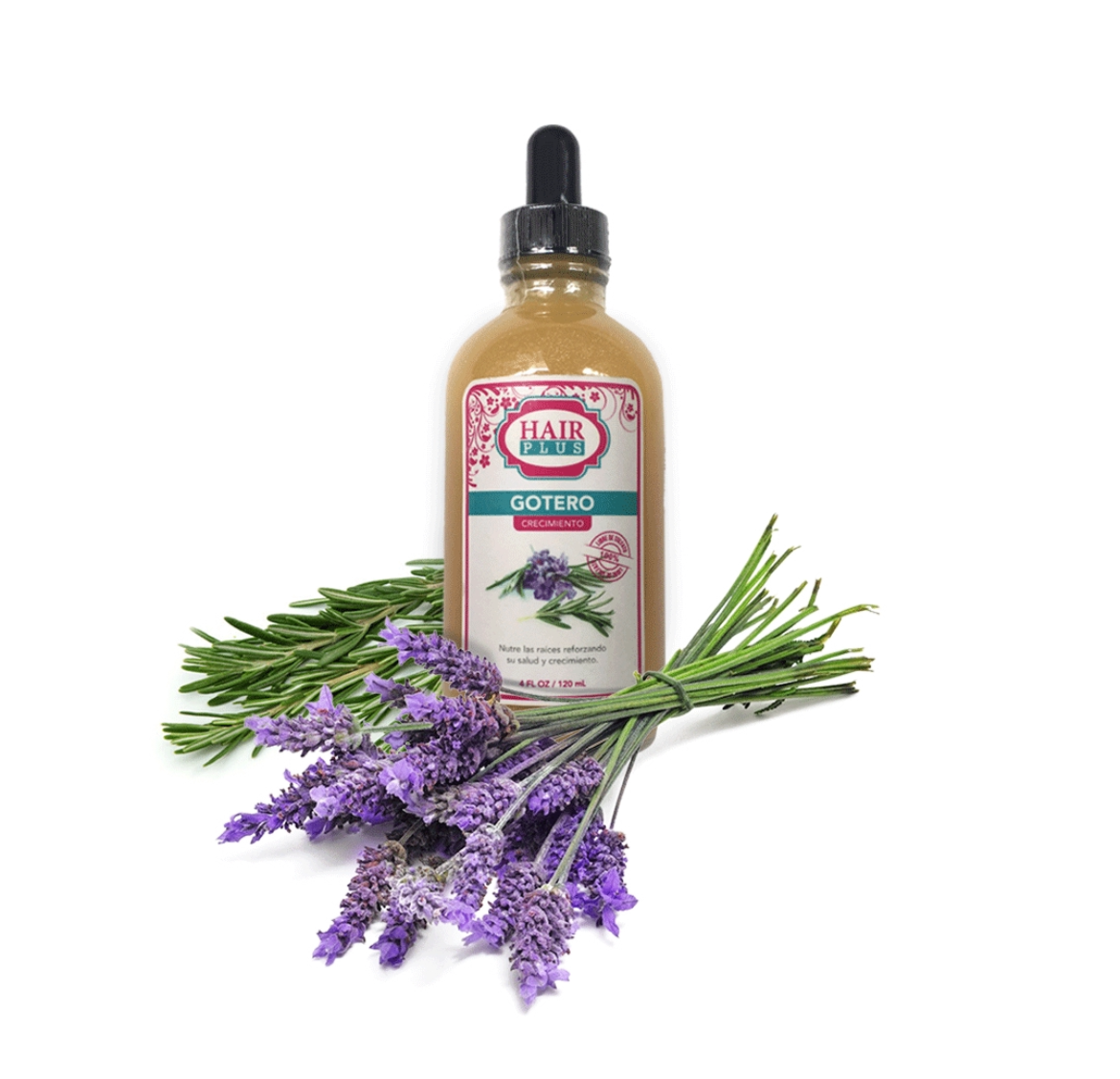
If you want a ready-to-use option that combines rosemary with other ingredients, check out our line at Hair Plus Productos. Start today with a consistent routine and evaluate your results in 8 to 12 weeks.
Frequently Asked Questions
How long does it take for hair to grow with rosemary oil?
There is no guaranteed timeframe. That is why it is best to evaluate results after several months of regular application and not expect rapid changes. If hair loss is intense or sudden, the most prudent thing is to consult a dermatologist.
Can rosemary oil be left in the hair overnight?
Some people do, but the evidence does not support an exact rule. Leaving it on for a long time can irritate a sensitive scalp, especially if the oil is not well diluted. Hair Plus Productos products are applied after washing or before and after, according to their directions for use.
What does science say about rosemary oil for hair loss?
The evidence is limited. Scientific evidence on rosemary oil for hair loss is limited. Hair Plus Productos products, such as the Growth Dropper - Hair Loss Control, include Rosmarinus Officinalis extract among their ingredients.